
Psychotherapy for Anxiety NYC: Compassionate Support to Help You Feel Like Yourself Again

Anxiety and depression can make even simple daily tasks feel overwhelming. You may find yourself constantly worrying, struggling to focus at work, avoiding social situations, or feeling emotionally drained. If these feelings have become part of your everyday life, know that you are not alone. Many people in New York City experience similar challenges and professional support can make a meaningful difference.
Choosing psychotherapy for anxiety NYC is not about admitting weakness. It is a proactive step toward improving your mental health, building resilience, and creating healthier ways to respond to life’s challenges. Therapy provides a confidential, supportive space where you can understand your emotions, identify unhelpful thought patterns, and develop practical coping skills that last.
If you are also experiencing persistent sadness, loss of motivation, or hopelessness, psychotherapy for depression NYC can help you regain confidence, reconnect with your goals, and improve your overall quality of life. With the right therapeutic approach, many people experience lasting emotional growth and greater peace of mind.
In this guide, you’ll learn how psychotherapy works, the benefits it offers, and why seeking professional support can be one of the most valuable investments you make in yourself.
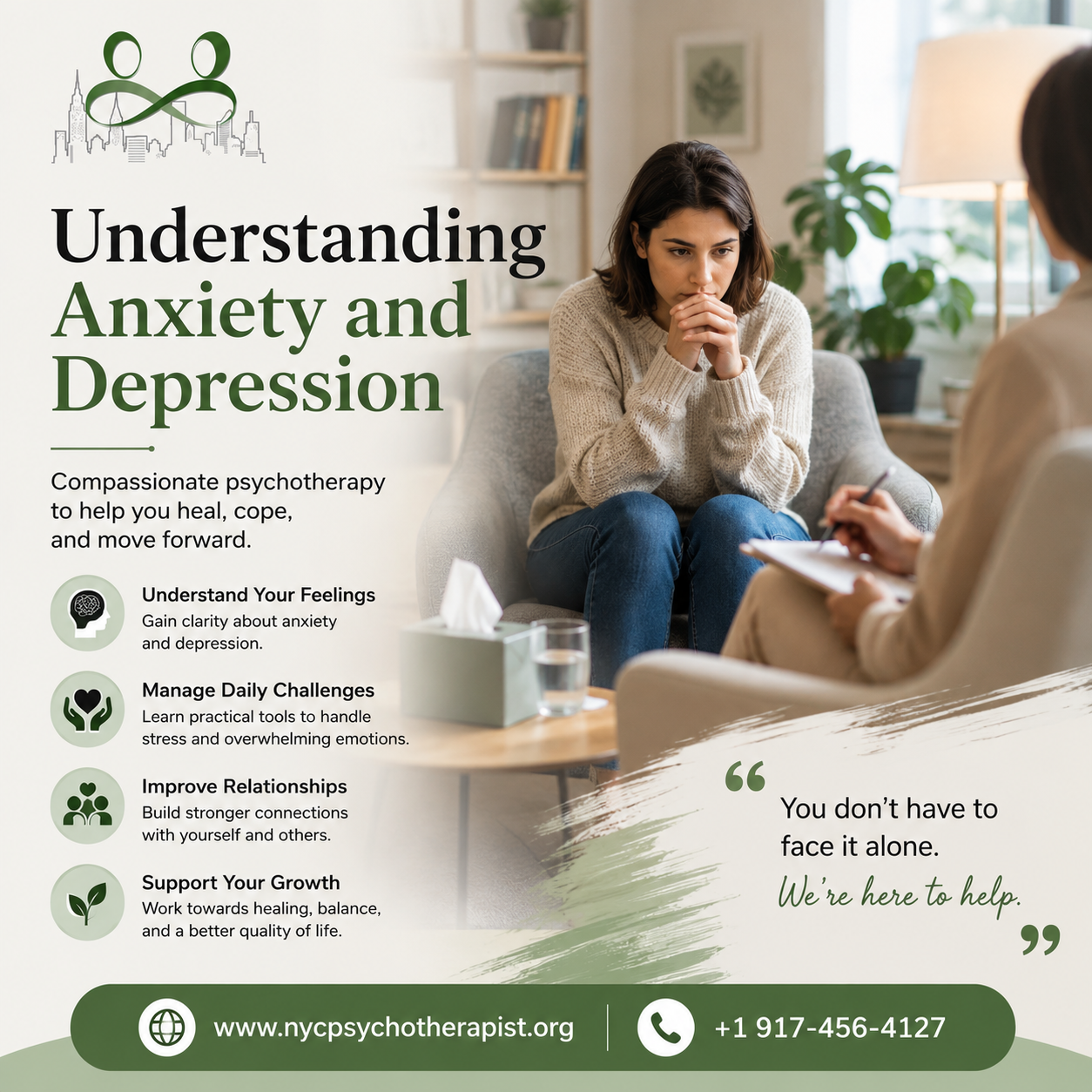
Understanding Anxiety and Depression
Everyone feels stressed, worried, or sad from time to time. These emotions are a normal part of life. However, when anxiety or depression begins to interfere with your relationships, career, physical health, or daily routine, it may be time to seek professional help.
What Is Anxiety?
Anxiety is more than occasional nervousness before an important event. It is a persistent feeling of fear, worry, or unease that can continue even when there is no immediate danger.
Common signs of anxiety include:
- Constant overthinking
- Racing thoughts
- Difficulty concentrating
- Trouble sleeping
- Feeling restless or on edge
- Muscle tension
- Increased heart rate
- Avoiding situations that trigger fear
Living in a fast-paced city like New York often adds extra pressure. Long work hours, financial responsibilities, commuting, and balancing personal commitments can all contribute to chronic stress. Over time, unmanaged anxiety may affect both emotional and physical health.
What Is Depression?
Depression is not simply having a bad day or feeling sad for a short period. It is a mental health condition that affects how you think, feel, and function.
People experiencing depression may notice:
- Persistent sadness
- Loss of interest in favorite activities
- Low energy
- Changes in sleep patterns
- Difficulty making decisions
- Feelings of guilt or worthlessness
- Reduced motivation
- Withdrawal from friends and family
Depression affects every person differently. Some people continue working and meeting responsibilities while silently struggling each day.
Why Anxiety and Depression Often Occur Together
Many people experience anxiety and depression at the same time. Constant worrying can become emotionally exhausting, while ongoing depression may increase feelings of fear and uncertainty about the future.
Because these conditions often overlap, treating only the symptoms may not provide lasting relief. Professional psychotherapy focuses on understanding the underlying emotional patterns rather than simply masking them.
How Anxiety and Depression Affect Everyday Life
Mental health challenges influence much more than emotions. They can affect nearly every aspect of daily living.
Relationships
You may become easily irritated, withdraw from loved ones, or struggle to communicate openly. Over time, misunderstandings and emotional distance can develop.
Career Performance
Difficulty concentrating, low motivation, excessive worry, or burnout can reduce productivity and make professional responsibilities feel overwhelming.
Physical Health
Mental and physical health is closely connected. Anxiety and depression may contribute to:
- Chronic fatigue
- Headaches
- Digestive discomfort
- Muscle pain
- Poor sleep quality
- Changes in appetite
Ignoring these symptoms often allows them to become more difficult to manage over time.
Fortunately, effective treatment is available. Through psychotherapy, many individuals learn healthier ways to manage stress, regulate emotions, improve relationships, and regain confidence without facing these challenges alone.
What Is Psychotherapy and How Can It Help?
Psychotherapy, often called talk therapy, is a proven approach that helps people better understand their thoughts, emotions, and behaviors. Rather than simply focusing on symptoms, psychotherapy works to identify the underlying causes of emotional distress. The goal is to help you develop healthier ways to cope with life’s challenges and improve your overall well-being.
Whether you are dealing with anxiety, depression, relationship concerns, work stress, or major life changes, therapy offers a private and supportive environment where you can speak openly without fear of judgment.
Unlike conversations with friends or family, psychotherapy is guided by a trained mental health professional that uses evidence-based techniques to help you move toward meaningful and lasting change.
How Psychotherapy for Anxiety NYC Can Help
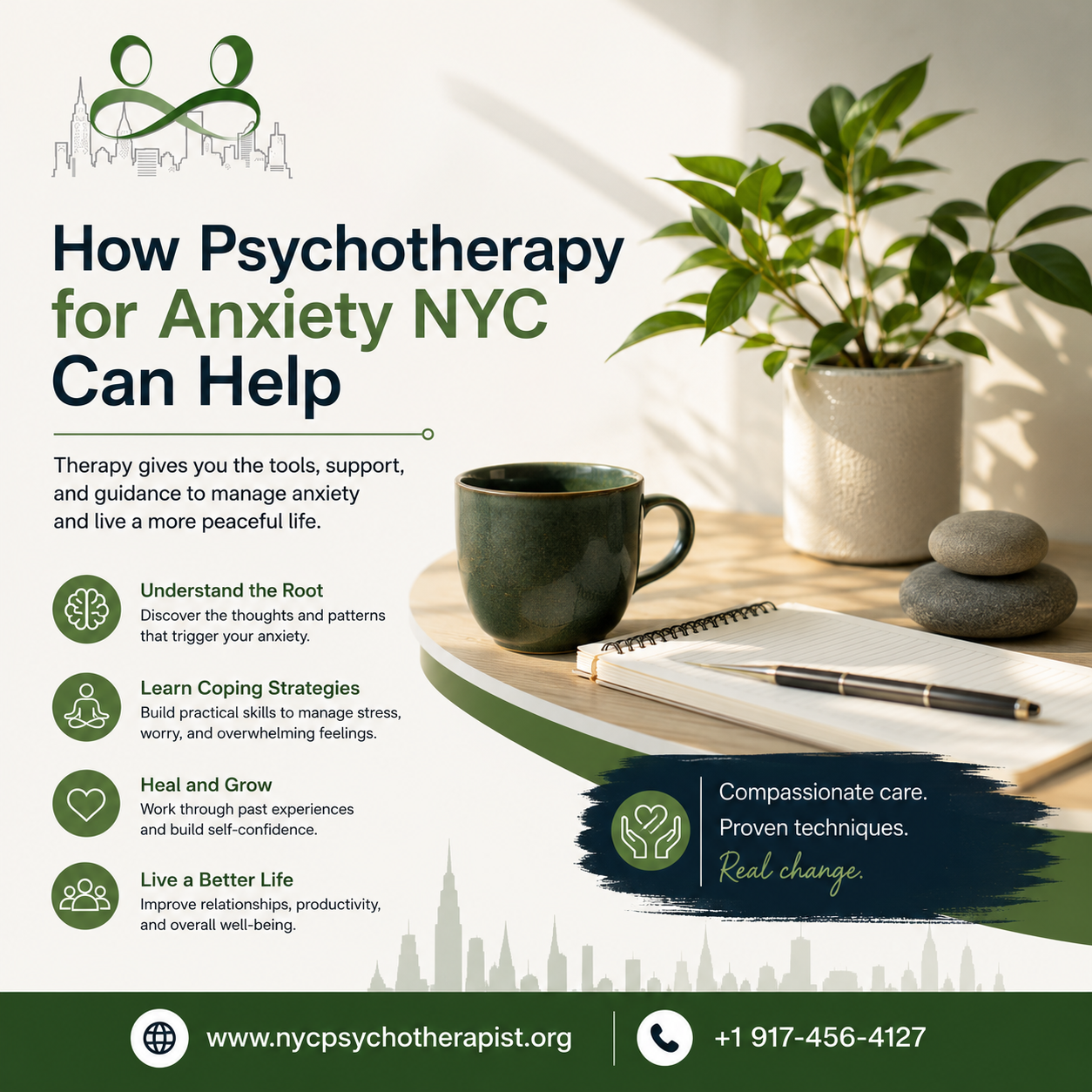
Anxiety often feels like your mind never slows down. You may constantly imagine worst-case scenarios, replay conversations, or worry about situations you cannot control.
Through psychotherapy for anxiety NYC, you can begin to understand what triggers your anxiety and learn practical tools to manage it more effectively.
Identify Your Anxiety Triggers
Many people know they feel anxious but are unsure why. Therapy helps uncover patterns that contribute to anxious thoughts and behaviors.
These triggers may include:
- Work-related stress
- Family responsibilities
- Financial concerns
- Relationship difficulties
- Past experiences
- Fear of failure
- Major life transitions
Once these patterns become clear, they are often easier to address.
Develop Healthier Coping Skills
Instead of avoiding stressful situations, therapy teaches practical strategies to respond with greater confidence.
You may learn how to:
- Challenge negative thinking
- Manage overwhelming emotions
- Reduce excessive worrying
- Improve emotional regulation
- Build confidence during stressful situations
- Respond calmly instead of reacting impulsively
These skills are useful not only during therapy but throughout everyday life.
Improve Your Quality of Life
When anxiety becomes more manageable, many areas of life begin to improve naturally.
Clients often notice benefits such as:
- Better concentration at work
- Improved sleep quality
- Increased confidence
- Healthier communication
- More enjoyable relationships
- Greater emotional balance
- More energy for daily activities
Small improvements made consistently can lead to meaningful long-term progress.
How Psychotherapy for Depression NYC Supports Recovery
Depression affects more than your mood. It can make everyday tasks feel exhausting and reduce your interest in activities you once enjoyed.
Seeking psychotherapy for depression NYC provides structured support that helps you gradually rebuild motivation, self-esteem, and hope for the future.
Understand the Root Causes
Depression develops for different reasons in different people.
Therapy helps explore factors that may contribute to emotional distress, including:
- Chronic stress
- Grief or loss
- Relationship problems
- Childhood experiences
- Workplace challenges
- Burnout
- Major life changes
Understanding these influences creates a foundation for healthier emotional growth.
Replace Negative Thought Patterns
Depression often causes people to become overly critical of them.
Common thoughts include:
- “I’m not good enough.”
- “Nothing will ever change.”
- “Everything is my fault.”
Psychotherapy helps recognize these unhelpful beliefs and replace them with healthier, more balanced ways of thinking. Over time, this process can improve self-confidence and emotional resilience.
Regain Motivation
Many people living with depression struggle to find energy for even simple tasks.
Therapy encourages gradual, realistic progress rather than expecting immediate change.
As treatment continues, many individuals begin to experience:
- Increased motivation
- Better daily routines
- Improved focus
- Greater emotional stability
- Renewed interest in hobbies
- More meaningful relationships
Recovery is not about becoming a different person. It is about reconnecting with the strengths and interests that depression may have overshadowed.
Why Professional Therapy Is Worth Considering
Some people hesitate to begin therapy because they believe they should be able to manage everything on their own.
The reality is that seeking help is a practical decision, not a sign of weakness.
Working with a qualified psychotherapist offers several advantages:
Personalized Care
Every person’s experiences, challenges, and goals are different. Therapy is tailored to your specific needs rather than using a one-size-fits-all approach.
Evidence-Based Techniques
Professional psychotherapy uses approaches supported by clinical research to help reduce symptoms and improve emotional well-being over time.
A Confidential Environment
Therapy provides a private space where you can discuss difficult emotions honestly without worrying about judgment.
Long-Term Emotional Skills
Rather than offering temporary relief, psychotherapy focuses on helping you build skills that support lasting mental wellness. These skills can improve relationships, reduce stress, strengthen decision-making, and increase confidence in future challenges.
Why Choose NYC Psychotherapist for Anxiety and Depression Support?
Finding the right therapist is an important step toward improving your mental health. While many professionals offer therapy, choosing someone who understands your concerns, listens without judgment, and creates a personalized treatment plan can make your experience more effective and comfortable.
At NYC Psychotherapist, the focus is on helping individuals better understand their emotions, strengthen coping skills, and build healthier ways of responding to life’s challenges. Every person has a unique story, so therapy is tailored to your individual needs rather than following a one-size-fits-all approach.
A Personalized Treatment Experience
Your experiences, goals, and challenges are unique. Therapy should reflect that.
A personalized approach may include:
- Understanding your personal history
- Identifying emotional patterns
- Setting realistic therapy goals
- Developing coping strategies that fit your lifestyle
- Tracking progress throughout your healing journey
This individualized care helps ensure therapy remains relevant to your needs as you grow and make progress.
A Safe and Confidential Space
Many people delay seeking help because they worry about being judged or misunderstood.
Therapy offers a confidential environment where you can:
- Speak openly about your thoughts and emotions
- Discuss difficult life experiences
- Explore personal challenges without fear of criticism
- Receive compassionate, professional support
Feeling heard and understood is often the first step toward meaningful emotional healing.

Benefits of Starting Psychotherapy Today
Many people wait months or even years before asking for help, hoping anxiety or depression will improve on its own. While everyone’s journey is different, early support can prevent symptoms from becoming more overwhelming and help you regain a sense of balance sooner.
Starting therapy today may help you:
- Feel calmer in stressful situations
- Reduce constant worry and overthinking
- Improve your sleep quality
- Build healthier relationships
- Increase confidence and self-esteem
- Strengthen communication skills
- Improve focus and productivity
- Develop healthier coping strategies
- Feel more emotionally balanced
- Enjoy daily life with greater peace of mind
Small steps taken consistently can create meaningful, lasting changes over time.
What to Expect During Your First Therapy Session
Beginning therapy can feel unfamiliar, especially if it is your first experience. Knowing what to expect can make the process feel more comfortable.
During your initial session, your therapist will typically:
Learn About You
You may be asked about:
- Your current concerns
- Your emotional experiences
- Family or relationship history
- Work or school stress
- Personal goals for therapy
There are no right or wrong answers. The purpose is simply to understand your situation better.
Create a Personalized Plan
Together, you and your therapist will discuss goals and identify areas to focus on during future sessions.
This collaborative approach helps ensure therapy is meaningful and aligned with your needs.
Build a Trusting Relationship
Therapy is most effective when you feel comfortable speaking honestly.
Over time, many clients develop greater self-awareness, emotional resilience, and confidence as trust grows within the therapeutic relationship.

Frequently Asked Questions
How do I know if I need psychotherapy?
If anxiety, depression, stress, or emotional challenges are affecting your daily life, relationships, work, or overall well-being, psychotherapy may help.
How long does therapy take?
The length of therapy varies for each person. Some individuals benefit from short-term support, while others choose longer-term therapy depending on their goals and circumstances.
Is everything I share confidential?
Yes. Therapy sessions are generally confidential, with limited legal and ethical exceptions that your therapist will explain.
Can psychotherapy help without medication?
For many people, psychotherapy alone can be highly effective. In some cases, therapy may also be used alongside medication as part of a comprehensive treatment plan. Your therapist can discuss options based on your specific needs.
Do I need to have a serious mental health condition to start therapy?
No. Many people seek therapy to manage everyday stress, improve relationships, build confidence, navigate life transitions, or develop healthier coping skills.
Take the First Step Toward Better Mental Health
Living with anxiety or depression can make each day feel more difficult than it needs to be. However, you do not have to face these challenges alone.
Choosing psychotherapy for anxiety NYC or psychotherapy for depression NYC is an investment in your emotional well-being, relationships, and future. Therapy provides practical tools, professional guidance, and compassionate support to help you better understand yourself and navigate life’s challenges with greater confidence.
Healing does not happen overnight, but every positive change begins with a single step. Whether you are experiencing constant worry, emotional exhaustion, persistent sadness, or simply want to improve your overall mental wellness, seeking professional support can help you move toward a healthier and more fulfilling life.
If you’re ready to create lasting positive change, consider scheduling a confidential consultation with an experienced NYC psychotherapist. With the right support, you can develop healthier coping strategies, strengthen emotional resilience, and move forward with greater clarity, confidence, and hope.